The 84 day FIP treatment protocol is a widely-adopted approach designed to eliminate the often fatal disease, Feline Infectious Peritonitis (FIP), in cats.
Utilizing GS-441524, this rigorous regimen involves daily sub-cutaneous injections or oral medication for a minimum of 84 consecutive days. The ultimate goal of this FIP treatment method is to eradicate symptoms and significantly improve the quality of life for affected felines.
Throughout the intensive course, careful monitoring and guidance from your vet are crucial to ensure optimal dosages and adherence to the protocol. Once the full 84 days have been completed symptom-free, an additional observation period lasting another 84 days commences before declaring victory over FIP. By following these guidelines with diligence and commitment, you can dramatically increase your beloved cat’s chances of defeating this devastating disease.
To determine whether to use FIP injections or oral treatment, the decision depends on various factors such as the severity of the disease and other individual health concerns that may affect the animal.
GS-441524 FIP Injections
Administering GS-441524 injections is recommended for cats diagnosed with both wet and dry forms of FIP, particularly when the feline patient is not exhibiting ocular or neurological symptoms. This treatment method has shown significant success rates in managing FIP effectively, making it a viable option to consider when treating cats affected by this life-threatening disease.
GS-441524 injections should be used in cases where the severity of FIP requires rapid intervention and efficient drug absorption. Since intravenous administration provides quicker results compared to oral treatments, opting for injection-based therapy can increase the chances of successful recovery.
Furthermore, using injections instead of oral alternatives may prove more effective due to their reliable nature and varying treatment periods based on individual case requirements.
Oral GS dosage is less precise than injectable dose. Tablets are tough to divide since they break, so cutting in half is frequently the best option. It is usually suggested to round up to the nearest half tablet when a computed dose falls between the indicated tablet dosage.
Cats that are currently vomiting/regurgitating and having diarrhoea are typically regarded poor candidates for oral GS-441524. As a result, cats with severe gastro-intestinal disorders are frequently started on injections, at least until the symptoms are cured.
Pros:
More accurate dosage
Better absorption
Drugs stay in body even during regurgitation and diarrhea
Cons:
Difficult to administer without training
Painful
Injection site sores
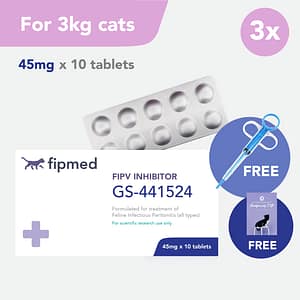
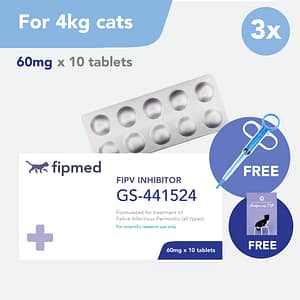
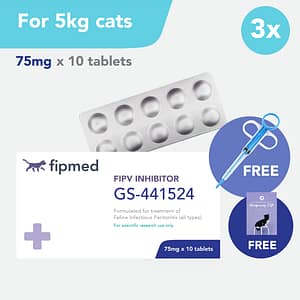
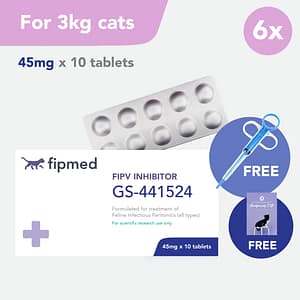
FIP Tablets Oral GS-441524
Oral medications provide a viable alternative for pet owners who may feel uncomfortable or unable to administer daily subcutaneous injections. Injection site sores can complicate therapy with the injectable form of GS. Injections can be uncomfortable, which makes the therapy difficult for both owners and cats.
However, it should be noted that during initial field testing for FIP treatments, subcutaneous injections were the primary administration method.
Oral formulations of GS-441524 have become more widely available and can offer certain advantages over injectable versions in specific situations. For example, some cats may not tolerate frequent injections well or their living conditions may make regular injection administrations challenging.
While FIP injections are believed to be more reliable than oral GS-441524 for FIP treatment, positive responses to antiviral treatment can still support a diagnosis of FIP in cases where oral medication is used.
Pros:
Easy for pet owners to administer
No pain
No injection site wound
Cons:
Less accurate dosage
Lower absorption rate
Cannot be used when cat is vomitting or having diarrhea
Veterinarians play an essential role in determining the best course of action for each unique case and will consider factors such as the cat’s overall health, potential risks and side effects associated with both forms of administration before recommending an appropriate therapy plan.
If your veterinarian suggests utilizing an oral formulation of GS-441524 as part of your cat’s 84-day FIP treatment protocol, they will carefully explain how best to proceed while closely monitoring progress throughout the process.
Combination Treatment is Most Ideal
We advise starting therapy with injectable GS-441524. Subcutaneous absorption of GS-441524 is also more dependable than oral absorption, which is typically a significant aspect in the early treatment of cats that are critically unwell and unstable from the start.
The capacity of the owner to administer injections in the most effective method, the desire of the cat to adjust to the injection discomfort, and the development of injection site sores all influence whether or not a cat continues injectable GS-441524.
After the cat stops vomiting, oral treatment can provide a pleasant break for both the owner and the feline patient. Several of the drugs provided may inhibit GS-441524 absorption. As a result, other medications and dietary supplements should be avoided when possible.
Cost of GS-441524
GS-441524 treatment is not cheap. Due to its current status as an unregulated drug, costs are unlikely to be covered by insurance.
Treating your cat can be very expensive, outcomes can be uncertain, and your own financial situation may impact your decision to pursue treatment. Vet fees will likely add substantial additional costs as well, so you can administer the treatment to save cost if need be.
As all cats are different sizes, and all cats have different infection severity, different treatments decisions will be required for each cat.
This site contains a dosage calculator to help you identify the treatment plan and from there you may calculate the cost estimate of the treatment. This is an initial estimate, and actual treatment costs will be different.
For this calculator, it is assumed that dry-FIP cases are treated at 10 mg/kg, and wet-FIP cases are treated at 6 mg/kg. The gain in cat weight is estimated based on actual data that have been logged on this website from cats undergoing treatment.